
When pet owners search for a veterinarian today, they rarely start by asking friends or flipping through directories. They open Google and type things like:
- “Vet near me”
- “Emergency veterinarian in Dallas”
- “Best animal hospital in Tampa”
- “Cat vaccination clinic near me”
The clinics that appear in Google Maps and the local search results get the calls, website visits, and appointment requests.
The clinics that do not appear are often invisible, even if they provide excellent care.
That is why local SEO has become one of the most important growth channels for independent veterinary practices. A strong local SEO strategy helps your clinic appear in front of nearby pet owners exactly when they are searching for care.
In this guide, you will learn how veterinary clinics can improve their visibility in Google Maps, optimize their Google Business Profile, generate more reviews, and rank higher in local search results.
Why Local SEO Matters for Veterinary Clinics
Local SEO helps your veterinary practice appear in search results for people in your area. Unlike traditional marketing, local SEO focuses heavily on geographic relevance. When experts handle SEO for vets, they focus on the ‘Map Pack’ because that is where 70% of local clicks happen
For veterinary clinics, this is critical because most searches are location-based.
How Pet Owners Search for Veterinary Services
Most veterinary searches happen on mobile devices and are often tied to urgency or convenience.
Examples include:
- Emergency vet near me
- Dog vaccination clinic in Austin
- Cat dentist near me
- Same-day veterinarian appointment
- Affordable vet in Miami
Google understands these searches are local. That means it prioritizes nearby businesses with strong relevance and trust signals.
If your clinic is not properly optimized for local SEO, Google may show competing clinics instead.
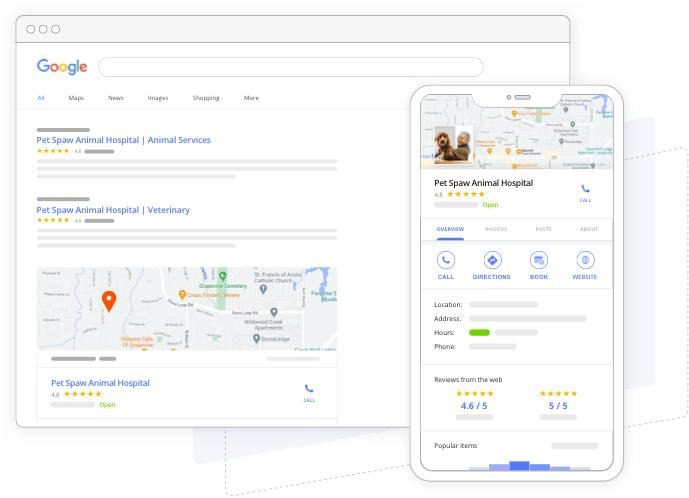
The Google Maps “3-Pack”
One of the most valuable positions in local SEO is the Google Maps “3-Pack.”
This is the block of three businesses that appears above traditional search results.
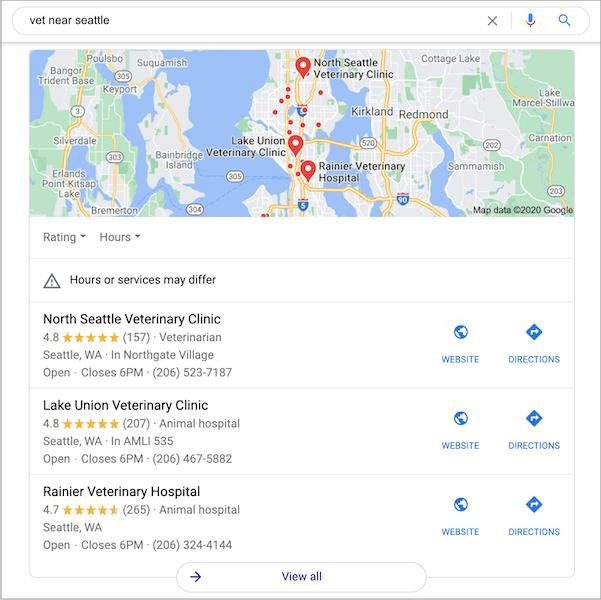
The clinics shown here receive:
- Significantly more clicks
- More calls
- More direction requests
- More appointment bookings
For many clinics, ranking in the map pack is more valuable than ranking organically below it.
The 3 Main Local Ranking Factors
Google primarily uses three factors for local rankings:
| Factor | What It Means | What You Can Control |
| Relevance | How closely your clinic matches the search | Categories, services, keywords |
| Distance | How close your clinic is to the searcher | Limited control |
| Prominence | How trusted and authoritative your clinic appears | Reviews, backlinks, citations, website SEO |
Most clinics ignore prominence, which is a mistake. Strong prominence signals through professional SEO for vets can help your clinic outrank closer competitors.
Optimize Your Google Business Profile
Your Google Business Profile is the foundation of local SEO for veterinary clinics.
As we mentioned in our complete beginner guide to SEO for veterinarians, an incomplete profile severely limits your ability to rank.
Choose the Right Primary Category
Your primary category is one of the strongest local ranking signals.
For most practices, the ideal primary category is:
- Veterinarian
However, some clinics may benefit from:
- Emergency Veterinarian Service
- Animal Hospital
- Veterinary Pharmacy
Your secondary categories should reflect actual services you provide.
Avoid adding irrelevant categories simply to chase rankings. Google can detect this.
Complete Every Section of Your Profile
Many clinics leave major ranking opportunities unfinished.
Your profile should include:
- Accurate business name
- Primary phone number
- Website URL
- Appointment booking link
- Business hours
- Holiday hours
- Services list
- Clinic description
- Attributes
- FAQs
- Photos
The more complete your profile is, the stronger your relevance signals become.
Write a Strong Business Description
Your description should clearly explain:
- What your clinic offers
- Where you are located
- What makes your practice unique
Example:
“ABC Veterinary Clinic provides preventive care, emergency treatment, pet vaccinations, dental services, and wellness exams for dogs and cats in Tampa, Florida.”
Avoid keyword stuffing or robotic writing.
Add High-Quality Veterinary Photos
Google rewards active, authentic profiles.
Photos help improve:
- Engagement
- Trust
- Click-through rates
Recommended photo types:
- Clinic exterior
- Waiting room
- Treatment rooms
- Veterinary staff
- Pets with owners
- Branded vehicles
- Team culture
Avoid relying heavily on stock images.
Real photos outperform generic visuals because they build trust with pet owners.
Use Google Posts Consistently
Google Posts help keep your profile active and fresh.
Post ideas:
- Seasonal pet care tips
- Vaccination reminders
- Holiday hours
- Clinic updates
- Pet dental awareness month
- Emergency preparedness tips
- New service announcements
Even posting once per week can improve engagement signals.
Set Up GBP Questions & Answers
Most veterinary clinics ignore the Q&A section.
That is a missed opportunity.
Add common questions proactively:
- Do you accept emergency visits?
- Do you treat exotic pets?
- Do you offer online consultations?
- What payment methods do you accept?
This improves both relevance and conversions.
Reviews Are One of the Biggest Local Ranking Signals
Reviews influence both rankings and trust.
For veterinary clinics, they matter even more because pet care decisions are emotional.
Pet owners want reassurance before trusting someone with their animals.
Why Reviews Matter So Much
Strong reviews help:
- Increase Google Maps visibility
- Improve click-through rates
- Build social proof
- Influence appointment decisions
A clinic with 250 positive reviews will almost always outperform a clinic with 12 reviews, assuming other factors are similar.
How to Generate More Reviews
Many clinics simply “hope” reviews happen.
That approach fails.
You need a review generation system.
Effective methods include:
- SMS follow-ups
- Post-appointment emails
- Front desk reminders
- QR code cards
- Automated review requests
The key is consistency.
Review velocity matters. A steady stream of reviews is better than 40 reviews all at once.
Respond to Every Review
Review responses improve:
- Engagement
- Trust
- Professionalism
- Local activity signals
They also show potential clients that your clinic cares about communication.
Example Positive Response
“Thank you for trusting our team with Bella’s care. We appreciate your kind words and look forward to seeing you again.”
Example Negative Response
“We’re sorry your experience did not meet expectations. Please contact our clinic directly so we can address your concerns.”
Never argue publicly with reviewers.
Review Mistakes to Avoid
Avoid:
- Fake reviews
- Buying reviews
- Keyword stuffing reviews
- Ignoring negative reviews
- Copying the same response repeatedly
Google can detect manipulation patterns.
Focus on genuine client feedback.
Veterinary Website SEO for Local Rankings
Your website supports your Google Maps visibility.
A weak website limits your local SEO potential.
Create Dedicated City and Service Pages
Many veterinary websites make the mistake of using one generic services page.
Instead, create targeted pages such as:
- Emergency Vet in Dallas
- Puppy Vaccinations in Miami
- Cat Dental Cleaning in Tampa
- Senior Pet Care in Phoenix
These pages help Google understand:
- Your service areas
- Local relevance
- Treatment specialties
Optimize Local Keywords Naturally
Use local keywords throughout:
- Headings
- Page titles
- Meta descriptions
- Body content
- Image alt text
Examples:
- Veterinary clinic in Tampa
- Veterinarian near downtown Austin
- Vet wellness exams in Miami
Do not force keywords unnaturally.
Modern SEO rewards readability and topical depth.
Add Local Business Schema
Schema markup helps search engines better understand your business.
Important schema fields include:
- Business name
- Address
- Phone number
- Operating hours
- Reviews
- Geographic coordinates
Schema improves your local relevance signals and may enhance search appearance.
Make Your Website Mobile-First
Most local veterinary searches happen on mobile devices.
Your website should:
- Load quickly
- Have click-to-call buttons
- Make booking easy
- Display properly on phones
- Avoid cluttered layouts
A slow mobile site damages both rankings and conversions.
Local Citations and Directory Listings
Citations are online mentions of your business information.
Google uses citations to validate trust and consistency.
What Are Local Citations?
A citation typically includes:
- Business name
- Address
- Phone number
This is often called NAP consistency.
Your information should match exactly everywhere online.
Important Directories for Veterinary Clinics
Focus on:
- Google Business Profile
- Yelp
- Apple Maps
- Bing Places
- Veterinary-specific directories
Inconsistent information weakens local trust signals.
Fix Duplicate Listings
Duplicate listings confuse Google and dilute ranking strength.
Common problems include:
- Old addresses
- Outdated phone numbers
- Duplicate Google profiles
- Inconsistent business names
Audit your listings regularly.
Build Local Authority and Backlinks
Backlinks remain important for local SEO.
But for veterinary clinics, local relevance matters more than raw quantity.
Sponsor Local Pet Events and Shelters
Excellent opportunities include:
- Adoption events
- Rescue organizations
- Pet wellness drives
- Animal charities
- Local pet expos
These partnerships can generate:
- Backlinks
- Brand visibility
- Referral traffic
- Community trust
Get Featured in Local Media
Veterinary clinics often overlook PR opportunities.
You can contribute:
- Pet safety tips
- Seasonal advice
- Holiday pet care warnings
- Emergency preparedness content
Local media mentions strengthen prominence signals.
Create Locally Relevant Content
Examples:
- Best Dog Parks in Tampa
- Tick Prevention Tips for Florida Pet Owners
- Hurricane Preparedness for Pets
- Summer Heat Safety for Dogs in Arizona
This type of content builds both local relevance and authority.
Multi-Location Veterinary SEO Strategy
If your practice has multiple locations, each location needs its own SEO strategy.
Create Unique Pages for Every Location
Avoid duplicate pages with only city names swapped.
Each location page should include:
- Unique services
- Local team information
- Unique photos
- Local reviews
- Area-specific content
Optimize Individual Google Business Profiles
Each clinic location should have:
- Its own profile
- Unique categories
- Unique reviews
- Accurate hours
- Local photos
Do not merge multiple clinics into one listing.
Avoid Keyword Cannibalization
Multiple clinics can accidentally compete against each other.
This happens when:
- Pages target identical keywords
- Content is duplicated
- Location signals are unclear
A strong local SEO structure prevents this issue.
Common Local SEO Mistakes Veterinary Clinics Make
Many clinics unknowingly damage their rankings.
Common mistakes include:
- Incomplete Google Business Profiles
- Weak review generation
- Stock-only photos
- Inconsistent business information
- No city pages
- Slow mobile websites
- Keyword stuffing
- Duplicate listings
- Ignoring Google Posts
- Poor booking experiences
Fixing these issues alone can improve visibility significantly.
How to Measure Local SEO Success
Tracking direction requests and calls is vital. If you aren’t seeing these numbers grow, book a free demo with us to audit your local strategy.
Local SEO should be measured using real business outcomes, not vanity metrics.
Important Local SEO KPIs
Track:
- Google Maps rankings
- Calls from GBP
- Direction requests
- Website clicks
- Appointment bookings
- Review growth
- Local keyword rankings
- Organic traffic
These metrics directly connect to clinic growth.
Tools Veterinary Clinics Can Use
Helpful tools include:
- Google Business Profile Insights
- Google Analytics
- Google Search Console
- Local rank tracking software
Track trends monthly rather than obsessing over daily fluctuations.
Local SEO Checklist for Veterinary Clinics
Use this checklist regularly:
- Claim and verify Google Business Profile
- Select proper business categories
- Add appointment booking links
- Upload authentic clinic photos
- Request reviews consistently
- Respond to reviews
- Build city-specific pages
- Add local schema markup
- Improve mobile speed
- Create Google Posts weekly
- Fix duplicate listings
- Track rankings and conversions
Frequently Asked Questions
How long does local SEO take for veterinary clinics?
Most clinics begin seeing improvements within 3 to 6 months. Competitive cities may take longer.
How do veterinary clinics rank higher on Google Maps?
Strong Google Business Profile optimization, reviews, local citations, backlinks, and localized website content all contribute to higher rankings.
What is the most important local SEO factor for veterinarians?
Google Business Profile optimization and review quality are two of the strongest factors.
How many Google reviews should a veterinary clinic have?
There is no exact number, but clinics with consistent review growth usually perform better than clinics with stagnant profiles.
Do veterinary clinics need city-specific pages?
Yes. Localized pages help search engines understand where your services are offered.
Can local SEO help emergency veterinary clinics?
Absolutely. Emergency searches are highly location-driven and often happen on mobile devices.
What is the difference between SEO and Google Maps optimization?
Traditional SEO focuses on website rankings. Google Maps optimization focuses on local visibility through Google Business Profile and map rankings.
Final Thoughts
Local SEO is no longer optional for veterinary clinics.
Pet owners increasingly rely on Google Maps, reviews, and local search results to choose where they take their animals for care.
Clinics that invest in local SEO gain:
- Stronger visibility
- More appointment requests
- Better trust signals
- Long-term competitive advantages
The clinics that consistently optimize their Google Business Profile, generate authentic reviews, improve local website content, and build community authority will dominate local search over time.
If your veterinary practice wants more visibility in Google Maps and local search, now is the time to build a serious local SEO strategy.
