
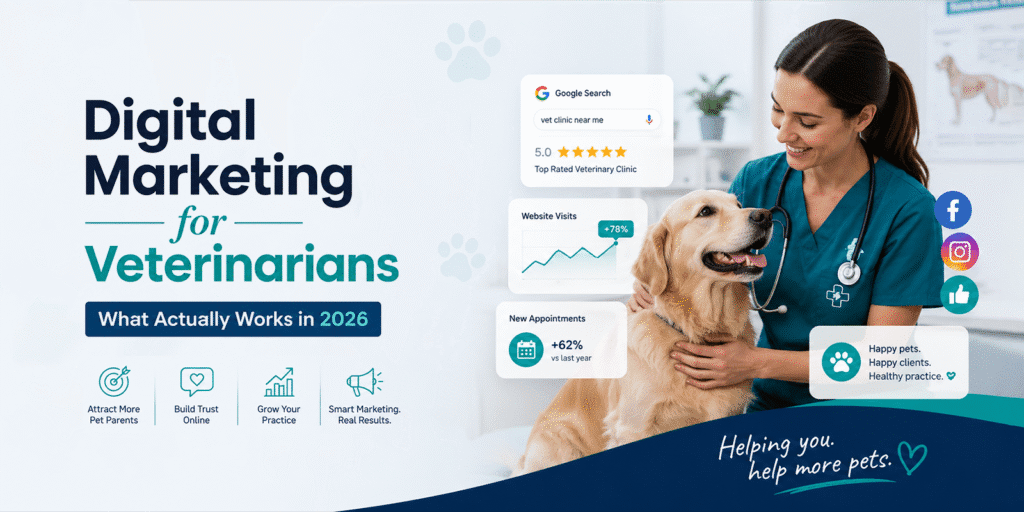
The veterinary industry has changed dramatically over the last few years. Pet owners no longer rely solely on referrals from friends and family when choosing a veterinarian. Today, their journey usually starts online.
They search Google, compare reviews, visit websites, and often make decisions before ever picking up the phone.
At the same time, many veterinary clinics continue investing time and money into marketing activities that generate little or no measurable return. Posting randomly on social media, boosting occasional Facebook posts, or running generic advertisements may create visibility, but visibility alone doesn’t fill appointment slots.
The clinics experiencing the most growth in 2026 understand a simple truth: successful digital marketing for veterinarians is not about being everywhere. It is about showing up at the right moments when pet owners are actively looking for care.
This guide explores the digital marketing strategies that are actually helping veterinary clinics attract new clients, increase bookings, improve retention, and grow sustainably.
How Pet Owners Find Veterinary Clinics in 2026
Understanding how clients search for veterinary services is the foundation of effective marketing.
A typical pet owner’s journey looks something like this:
- Search Google for a veterinary service.
- Review Google Maps results.
- Compare reviews and ratings.
- Visit clinic websites.
- Book an appointment.
Many clinic owners assume social media is where new clients originate. In reality, most appointment-driven searches happen through Google and Google Maps, making organic search visibility the most critical piece of your vet digital marketing strategy.
A pet owner searching for “vet near me,” “emergency veterinarian,” or “dog vaccination clinic” already has intent. They are looking for care now, not casually browsing content.
This means your marketing strategy should focus heavily on visibility during these high-intent moments.
Why Word-of-Mouth Is Now Digital
Traditional referrals still matter, but they now occur online.
Instead of asking neighbors for recommendations, pet owners check Google reviews, Facebook recommendations, and online ratings. According to the BrightLocal Local Consumer Review Survey, online reviews carry the same weight as personal recommendations for local businesses.
A five-star review profile often carries more influence than a personal referral.
This is why online reputation management has become one of the most important components of veterinary marketing.
The Five Digital Touchpoints Every Clinic Needs
Successful veterinary practices consistently optimize these five areas:
- Google Business Profile
- Online reviews
- Website experience
- Local SEO
- Appointment booking process
Weakness in any one area can reduce conversions significantly.
The Biggest Digital Marketing Mistakes Veterinary Clinics Still Make
Before discussing what works, it is important to understand what often fails.
Treating Social Media as the Entire Marketing Strategy
Many clinics spend hours creating social content while neglecting their website, reviews, and local search visibility.
Social media can support your marketing efforts, but it rarely serves as the primary driver of appointment bookings.
Ignoring Google Business Profile
Some veterinary practices claim and verify their Google Business Profile but never update it again.
An incomplete profile can significantly reduce visibility in local search results.
Investing in Traffic Before Fixing Conversion Problems
Generating website visitors is only half the battle.
If visitors cannot easily find information, trust your clinic, or book appointments, increased traffic will not produce meaningful growth.
Neglecting Existing Clients
Many clinics focus exclusively on acquiring new clients while overlooking retention opportunities.
Existing clients are often the most profitable source of revenue.
Measuring Likes Instead of Appointments
Marketing success should be measured by:
- Appointments booked
- Phone calls generated
- New client registrations
- Revenue growth
Not by social media engagement alone.
What Actually Works #1: Google Business Profile Optimization
For many veterinary clinics, Google Business Profile is the single most valuable digital marketing asset.
When pet owners search for veterinary services, Google often displays map results before organic website listings.
Appearing prominently in these results can generate a steady stream of highly qualified leads.
Essential Elements of an Optimized Profile
Every veterinary clinic should ensure that its profile includes:
- Accurate business information
- Primary and secondary categories
- Complete service listings
- Appointment booking links
- High-quality clinic photos
- Team photos
- Updated operating hours
The Importance of Google Posts
Regular updates signal activity and relevance.
Consider posting:
- Seasonal pet care tips
- Vaccination reminders
- New service announcements
- Clinic events
- Team introductions
Common Mistakes
Avoid:
- Outdated business hours
- Missing service information
- Low-quality images
- Incomplete descriptions
- Ignoring customer reviews
A properly optimized profile often delivers faster results than many other marketing activities.
What Actually Works #2: Online Reviews and Reputation Management
Reviews influence both rankings and conversion rates.
A clinic with hundreds of positive reviews immediately establishes trust.
A clinic with very few reviews often loses potential clients before they ever visit the website.
Why Reviews Matter
Reviews help:
- Improve local search rankings
- Increase click-through rates
- Build trust
- Influence decision-making
Many pet owners compare review profiles before contacting any clinic.
Creating a Review Generation System
The most successful practices do not leave reviews to chance.
Instead, they create a process:
Appointment Completed → Follow-Up Message → Review Request → Google Review
This simple workflow consistently generates new reviews.
Responding to Reviews
Responding demonstrates professionalism and engagement.
Thank positive reviewers and address negative feedback professionally and respectfully.
Potential clients often evaluate your responses as much as the reviews themselves.
What Actually Works #3: A Veterinary Website Built to Convert
Your website serves as your digital front desk.
Many veterinary websites look attractive but fail to generate appointments.
The goal is not simply to inform visitors. The goal is to convert visitors into clients.
Essential Features Every Veterinary Website Needs
Mobile-Friendly Design
Most veterinary searches now occur on mobile devices.
A poor mobile experience leads to lost opportunities.
Online Booking
Pet owners increasingly expect convenience.
The easier it is to schedule an appointment, the higher your conversion rate.
Click-to-Call Functionality
Many visitors prefer immediate contact.
Make phone numbers visible and clickable throughout the site.
Emergency Information
Emergency services should be easy to locate.
Confused visitors often leave and contact competitors.
Trust Signals
Include:
- Reviews
- Testimonials
- Certifications
- Awards
- Association memberships
Trust reduces hesitation.
Service Pages Matter
Dedicated pages should exist for services such as:
- Wellness exams
- Vaccinations
- Surgery
- Dental care
- Emergency services
- Telemedicine consultations
These pages help both SEO and conversions.
What Actually Works #4: Local SEO for Veterinary Clinics
Local SEO remains one of the highest ROI marketing investments for veterinary practices.
Unlike broad advertising campaigns, local SEO targets people actively searching for veterinary services in your area.
Why Local SEO Is So Effective
Pet owners often search using terms such as:
- Veterinarian near me
- Emergency vet in [city]
- Dog vaccinations near me
- Cat dental cleaning [city]
Ranking for these searches can generate consistent appointment requests.
Service Page Optimization
Each major service should have a dedicated page targeting relevant keywords.
Examples include:
- Veterinary dental care
- Pet vaccinations
- Puppy wellness exams
- Senior pet care
- Virtual vet consultations
Location Pages
Multi-location practices should create dedicated pages for each service area.
These pages help improve local visibility and relevance.
Technical SEO Factors
Strong local seo veterinary campaigns also require solid technical foundations:
- Fast website speed
- Mobile optimization
- Internal linking
- Schema markup
- Clear site structure
Together, these elements help improve rankings and user experience.
What Actually Works #5: Google Ads for Immediate Growth
SEO is powerful but takes time.
Google Ads can generate immediate visibility.
When Google Ads Makes Sense
Google Ads works particularly well for:
- New clinics
- New locations
- Seasonal promotions
- Competitive markets
- Emergency services
High-Converting Veterinary Campaigns
Popular campaigns include:
- Emergency veterinary care
- Puppy and kitten wellness visits
- Vaccination packages
- Pet dental services
- New client specials
Common Advertising Mistakes
Many clinics:
- Target overly broad keywords
- Send traffic to weak landing pages
- Fail to track conversions
- Ignore call tracking
Successful campaigns focus on measurable appointment generation.
SEO vs Google Ads
The strongest growth strategy combines both.
Google Ads provides immediate traffic.
SEO builds long-term visibility and reduces dependency on advertising spend.
What Actually Works #6: Client Retention and Reactivation Marketing
Many clinics underestimate the value of retention marketing.
Acquiring a new client typically costs significantly more than retaining an existing one.
Appointment Reminders
Automated reminders help reduce no-shows while improving client satisfaction.
Wellness Plan Promotion
Many clinics successfully increase recurring revenue through wellness plans.
Marketing these programs consistently can improve retention and predictability.
Reactivation Campaigns
Inactive clients often represent untapped revenue.
Simple campaigns can encourage previous clients to schedule another visit.
Examples include:
- Annual wellness reminders
- Vaccination updates
- Seasonal health campaigns
- Special offers
Email Marketing That Works
Effective veterinary emails include:
- Pet health tips
- Appointment reminders
- Service updates
- Seasonal alerts
- Educational content
The goal is to remain top of mind while providing value.
What Doesn’t Work Anymore
Not every marketing tactic deserves equal attention.
Random Social Media Posting
Posting without a clear strategy rarely produces measurable results.
Buying Followers
Artificial engagement does not generate appointments.
Generic Blog Content
Publishing content without keyword research or strategic goals often delivers little value.
Outdated Directory Tactics
Submitting to hundreds of low-quality directories no longer provides meaningful SEO benefits.
Vanity Metrics
High impressions, likes, and followers mean little if appointments remain unchanged.
Focus on outcomes that impact revenue.
How Much Should a Veterinary Clinic Spend on Marketing?
Budget depends on growth goals and market competitiveness.
Under $500 Per Month
Focus on:
- Google Business Profile
- Reviews
- Basic website improvements
$500 to $1,500 Per Month
Focus on:
- Local SEO
- Service page creation
- Content marketing
$1,500 to $3,000 Per Month
Focus on:
- SEO
- Google Ads
- Reputation management
$3,000+ Per Month
Implement a comprehensive growth strategy including:
- SEO
- Paid advertising
- Website optimization
- Retention marketing
- Conversion tracking
Common Budget Mistakes
Many clinics overspend on social media while underinvesting in SEO, reviews, and conversion optimization.
The highest returns usually come from channels tied directly to appointment intent.
A Simple 90-Day Veterinary Marketing Plan
Month 1: Build the Foundation
- Optimize Google Business Profile
- Improve website conversion elements
- Create a review generation process
Month 2: Increase Visibility
- Launch local SEO campaign
- Create service pages
- Publish keyword-targeted content
Month 3: Accelerate Growth
- Launch Google Ads
- Implement email campaigns
- Improve conversion tracking
This phased approach helps clinics build sustainable growth without becoming overwhelmed.
The Veterinary Marketing Stack for 2026
The most successful clinics use a connected system rather than isolated tactics.
Must-Have Tools
- Professional website
- Online booking system
- Reputation management solution
- Analytics platform
Nice-to-Have Tools
- Marketing automation
- Live chat
- Client messaging systems
- Virtual consultation software
Tools Most Clinics Do Not Need Yet
Many clinics rush into advanced marketing tools before mastering the fundamentals.
Is Your Clinic Invisible on Google Maps? Let’s Fix It.
Most veterinary clinics are losing dozens of local bookings a month simply due to hidden Google Business Profile errors or broken mobile conversion paths. You don’t need a bigger marketing budget; you just need to fix the leaks.
Get a personalized, 15-minute video breakdown of your clinic’s current online visibility—completely free, with zero sales pressure.
Claim My Free 15-Minute Video SEO Audit*No credit card or contract required. Just actionable fixes for your practice.*
Conclusion
The most effective digital marketing for veterinarians in 2026 is surprisingly straightforward.
Clinics generating the strongest results focus on:
- Google Business Profile optimization
- Online review generation
- High-converting websites
- Local SEO
- Strategic Google Ads campaigns
- Client retention marketing
Rather than trying every marketing tactic available, focus on the channels most closely connected to appointment bookings.
The clinics that consistently grow are not necessarily the ones spending the most money. They are the ones building systems that make it easy for pet owners to find them, trust them, and schedule care.
When these elements work together, digital marketing becomes a predictable engine for practice growth rather than a collection of disconnected activities.
Frequently Asked Questions
What is the best digital marketing strategy for veterinarians?
The most effective strategy integrates a localized Google Business Profile with search-optimized appointment pipelines. For modern practices, this means syncing local search visibility directly with practice management software (PIMS) like Hippo Manager or ezyVet to enable real-time online booking, automated reminder workflows, and seamless digital onboarding for new pet owners.
How can veterinary clinics get more clients?
Clinics acquire high-value clients by deploying high-intent local SEO funnels and zero-friction conversion design. Optimizing dedicated landing pages for specialized services—such as digital radiography, veterinary dentistry, and mobile equine diagnostics—while embedding click-to-call functionality and paperless client invoicing options instantly shortens the client acquisition journey.
Is SEO worth it for veterinary clinics?
Yes, localized search engine optimization delivers the highest long-term ROI by capturing active demand. Ranking for intent-driven search strings ensures your clinic intercepts pet owners exactly when they require urgent care, wellness exams, or specialized veterinary surgeries, vastly outperforming generic brand awareness campaigns.
Should veterinarians invest in Google Ads?
Paid search campaigns are highly recommended for capturing immediate emergency care traffic and launching new locations. Utilizing highly targeted Google Ads allows clinics to dominate local search results for lucrative, immediate-need services like urgent diagnostics, surgical consultations, or evening emergency drop-offs before organic search positioning matures.
How long does veterinary SEO take to work?
Veterinary local SEO campaigns typically yield measurable booking growth within three to six months. Timeline variations depend heavily on local competitor density, existing domain authority, and technical optimizations—such as schema markup deployment and cloud-based data migration from legacy servers to modern, search-indexed practice websites.
Can social media alone grow a veterinary practice?
No, social media serves as a client retention tool rather than a primary patient acquisition engine. While platforms like Instagram foster community engagement, actual appointment volume is driven by search engine visibility, 5-star online reputation signals, and a secure, HIPAA-compliant website optimized for instant digital booking.
